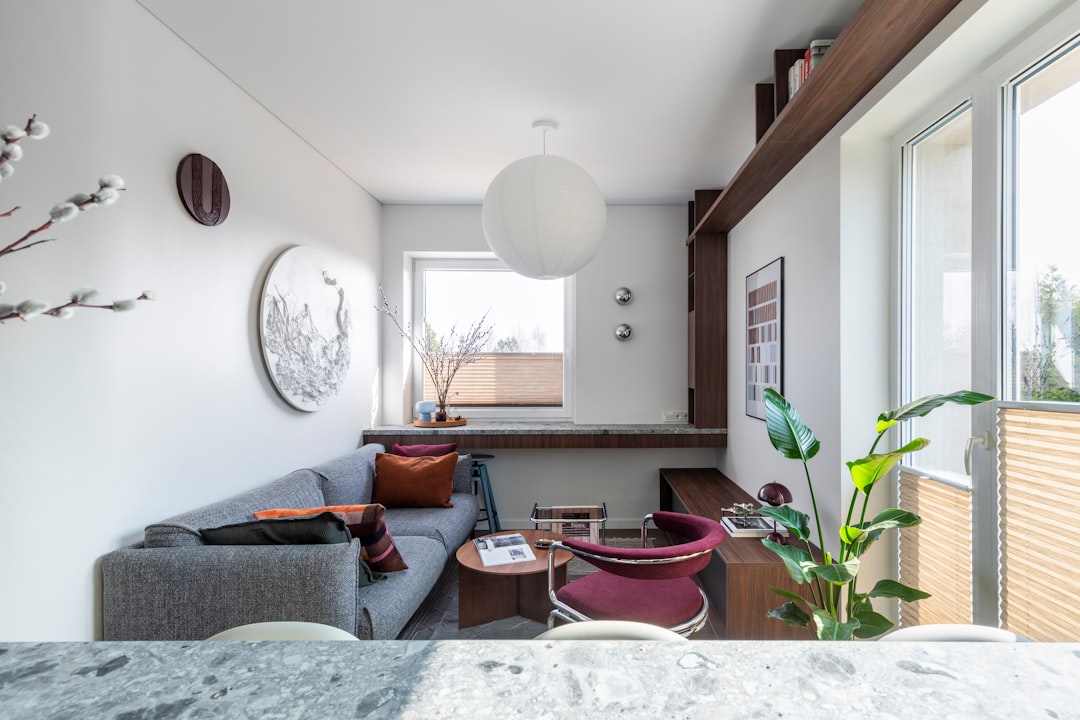
Interior decorating for small apartments gets easier when I stop asking how to fit more in and start asking what the room is already doing well. A compact home can feel generous, but only when every object has a reason to be there. I keep a running reference board on Albertini Arts when I want to compare proportion, color balance, and material pairings before I buy anything new.
The trick is not to make a small apartment look larger through tricks alone. The real goal is simpler. I want the room to feel easy to move through, easy to clean, and easy to enjoy at the end of the day. That feeling comes from a handful of repeatable choices: a better floor plan, a restrained palette, furniture that earns its footprint, and a storage plan that blends into the room instead of fighting it.
When I work through a small apartment, I start with one sentence. The room should feel light in the morning, grounded at night, and calm enough that the storage fades into the background. That sentence becomes the filter for everything else. If a lamp, chair, or rug does not support that feeling, I leave it out. That habit saves money and keeps the apartment from becoming a collection of unrelated purchases.
What follows is the approach I use when I want a compact space to feel deliberate instead of crowded. None of it depends on a huge budget. Most of it depends on editing, repetition, and a little patience.
Interior decorating for small apartments starts with the feeling, not the furniture
The most common mistake I see is shopping before thinking. A person measures the sofa, compares rug sizes, saves twenty lamp photos, and still has no clear idea of the room’s purpose. In a small apartment, that is a fast way to create clutter with better packaging. The room needs a mood first. Furniture comes after.
I like to ask three questions before I touch a catalog. What do I do most in this room? What should I notice first when I enter? What can stay visually quiet? Those answers tell me where the design should work hardest. A studio that doubles as a bedroom and office needs a different balance than a one-bedroom where the living room is the social center. The use case comes first because the use case decides the shape of the room.
Once I know the feeling I want, I can make cleaner decisions. If the room should feel calm, I avoid too many competing colors. If it should feel polished, I keep the materials consistent. If it should feel welcoming, I make sure there is one warm element near the entry. The point is not to strip the room bare. The point is to choose pieces that point in the same direction.
This also helps with budget decisions. In a small apartment, every item is visible. A bulky chair, an awkward lamp, or a rug that is the wrong scale can dominate the whole scene. That means the best money often goes toward the few pieces that set the tone. A good sofa, a correctly sized rug, and a solid lamp can do more for the room than a dozen decorative extras.
I also think about how the room will look from the doorway. That first view matters. If the entrance hits a jumble of cords, random surfaces, and mismatched items, the apartment will feel smaller than it is. If the first view is calm, the whole place feels more generous.
- Write one sentence that describes the desired mood.
- Identify the room’s main function and its secondary function.
- Decide what should remain visually quiet.
- Buy for the whole room, not for isolated corners.
When I start there, the rest of the project gets a lot easier.
Build the layout around movement, entry, and sightlines
Layout is the hidden structure of comfort. I have seen beautiful furniture fail because the walking path cut straight through the middle of the room or because the sofa blocked the natural line from the door to the window. In a small apartment, the floor plan is not background work. It is the design itself. If the layout feels awkward, the room will feel awkward even with good finishes.
I begin by tracing how I move through the space on an ordinary day. Where do I enter? Where do I drop my keys? Where do I sit first? Where does my eye land from the doorway? Those answers tell me where to place the anchor pieces. In many compact homes, the anchor is a sofa, a bed with a strong headboard, or a dining table placed with enough breathing room around it.
Then I check the clearance around everything. You do not need a huge amount of open floor, but you do need enough room to move without twisting around furniture. If a cabinet door hits a chair, if a desk chair catches on the rug, or if a storage bin blocks a drawer, the room is asking too much of you. That friction adds up quickly.
One of the most useful habits I have is using tape on the floor before buying the largest pieces. I mark the sofa, rug, or table outline and walk around it for a day. That simple test shows me more than a product photo ever could. A piece that looks perfect online can feel clumsy in the room once it takes up physical space.
I also pay attention to the view from each doorway. A small apartment feels calmer when the eye can move through it. That means avoiding tall, heavy items right at the entry unless they serve a real purpose. Low furniture, slimmer profiles, and a clear path to the window can make the room feel less boxed in.
Think of the floor plan in layers. The first layer is movement. The second layer is sightline. The third layer is function. If all three layers work together, the room feels natural instead of forced.
- Keep the main walking path open from entry to window or main seat.
- Place the largest piece where the room naturally wants an anchor.
- Use tape or paper templates before large purchases.
- Check the room from the doorway and from the seated position.
Good layout does not call attention to itself. It just makes the apartment feel easy.
Choose a palette that holds the room together
Color in a small apartment should feel coordinated, not crowded. Too many strong colors can make a compact room feel busy even when the furniture is minimal. I usually start with one main neutral, one supporting tone, and one accent that appears only in a few places. That gives the room variety without breaking its rhythm.
Warm white, soft gray, oatmeal, muted olive, dusty blue, and natural wood often work well because they do not compete with the architecture. But the exact shade matters more than the category. A white with a yellow undertone reads differently from a white with a blue undertone. If the sofa, walls, curtains, and rug all pull in different directions, the room can feel unsettled even when each item looks good alone.
I like to think in layers. The walls set the distance. The larger furniture pieces set the weight. Textiles and smaller objects carry the accent. When those layers belong to the same family, the eye reads the apartment as one whole, not as a pile of separate decisions. That is especially valuable in a small space because visual unity does a lot of work.
If a person wants stronger color, I usually suggest keeping the boldest shade on one movable object. A pillow, a chair, a lamp, or a framed print can introduce personality without locking the room into a scheme that starts to feel tiring later. That flexibility matters in small apartments, where the room has little room to absorb an overly busy palette.
I also look at the color balance in different light. A gray that feels soft in daylight can look flat at night. A cream that looks warm at noon can feel yellow under a lamp. Testing swatches in the actual apartment is one of the simplest ways to avoid disappointment.
A final trick is repetition. If a wood tone or metal finish shows up in several places, the room feels intentional. A repeated finish creates a thread that ties the apartment together.
- Pick one dominant neutral for large surfaces.
- Repeat a wood tone or metal finish across the room.
- Limit bold color to a few movable objects.
- Check swatches in daylight and evening light.
A restrained palette can still feel rich. It just has to work quietly.
Select furniture that earns its footprint
Every piece of furniture in a small apartment needs to justify the space it takes. That does not mean everything has to fold, stack, or hide. It means every item should contribute more than one kind of value. A sofa can define the room and provide storage underneath. A coffee table can hold books, support a tray, and still feel light. A dining table can double as a work surface if the proportions are right.
Scale matters more than style. I have seen beautiful armchairs overwhelm a narrow living room because the arms were too wide and the seat sat too low. I have also seen modest, well-made pieces make a room feel more expensive because they respected the proportions. In a compact apartment, slim legs, raised bases, and smaller silhouettes often work better than heavy forms that sit flat on the floor.
Rounded edges can help when the room has tight paths. Sharp corners can catch the eye and the body. But shape is only part of the equation. You also want space around the furniture. A sofa that is technically the correct width can still feel bulky if it sits wall to wall with no margin. Small rooms need a little air so the furniture does not feel jammed into place.
Multi-use pieces are useful, but only when they look like normal furniture first. A storage ottoman that looks like a simple upholstered block can work well. A nesting table can be elegant if the pieces nest cleanly and do not wobble the room visually. I prefer one good solution to three awkward ones.
When I compare options, I look at three questions. How does this piece appear from the doorway? How does it feel when I sit beside it? How much visual weight does it add after dark, when the lamps are on and shadows flatten the room? Those questions reveal more than a product page ever will.
I also try to keep one larger item and a few smaller supports instead of many tiny pieces. Too many small items can make a room feel chopped up. A more confident scale, even when it is modest, usually reads better.
- Choose pieces with visible legs when you want a lighter look.
- Prefer fewer, better-sized items over many tiny ones.
- Check comfort and visual weight, not only dimensions.
- Let each object serve at least two purposes where possible.
If a piece looks good but disrupts daily use, it is not the right piece.
Use storage that disappears into the room
Storage is where small apartments either stay calm or become visually loud. Open shelves, baskets, trays, and cabinets can all work, but they need editing. If every shelf becomes a stage, the apartment starts to feel crowded even when the floor is clear. I usually aim for a balance between hidden storage and selective display. That keeps the room practical without turning it into a warehouse of objects.
Closed storage is the easiest way to quiet visual noise. A cabinet with clean fronts can hide papers, cables, chargers, spare bedding, cleaning items, and the things that keep life moving behind the scenes. When the eye is not forced to process all of that at once, the apartment feels larger and calmer. The room still works hard. It just does so quietly.
Open storage has a place, but it works best when the objects share a family or a purpose. Books, ceramics, folded towels, and a few framed pieces can look deliberate. Random leftovers do not. I like to leave some shelf space open on purpose. Negative space gives the pieces you do keep room to breathe and makes the shelf feel intentional rather than full.
Vertical storage is often underused. Tall cabinets, wall hooks, rails, shelves above eye level, and slim wall-mounted organizers can free the floor and keep daily items within reach. The trick is to stop before the walls start feeling busy. Storage should solve the room, not become the room.
A good storage plan also respects habits. If I drop my keys at the door, I want a tray there. If I read in bed, the books should live near the bed. If I work from home, the laptop should have a real home instead of migrating around the apartment. Design around actual behavior, not the version of yourself who stays perfectly organized.
I also think in categories. Daily-use items need easy access. Occasionally used items can move higher or deeper into cabinets. Seasonal items can go out of sight. That hierarchy keeps the apartment from feeling like every object has equal urgency.
- Use closed storage for items you need but do not want to see.
- Use open storage for edited displays only.
- Place storage where the habit already happens.
- Give every category a clear home.
When storage lines up with routine, the apartment stays easier to live in.
Let light do more of the visual work
Light can make a small apartment feel fresh, flat, cozy, or cramped without moving a single chair. That is why I always look at the room in daylight and after dark before making final choices. Some apartments get strong sunlight and still feel dim because the light stops at the window. Others have softer daylight but come alive at night when layered lamps create depth.
I think in layers here too. Ceiling light gives general brightness. A floor lamp or table lamp creates warmth and a sense of corners. A reading lamp near a chair or bed adds focus. If every light source does the same job, the room can feel harsh. If the lighting layers are different, the apartment gains dimension and the edges soften.
Window coverage matters more than many people expect. Heavy fabric that crowds the window can make a small room feel boxed in. Lighter curtains, sheer panels, or simple shades often work better because they soften the view without swallowing the wall. Hanging them a little higher than the frame can also make the room feel taller. It is a simple move, but it changes the proportion of the wall.
Mirrors can help, but only when they reflect something worth seeing. A mirror facing a clean window can pull daylight deeper into the room. A mirror facing a cluttered shelf will just double the clutter. I prefer one carefully placed mirror over several scattered ones. Too much reflection can make the apartment feel restless instead of open.
Bulb temperature matters as well. A warm bulb often feels better in a living area or bedroom, while a slightly cooler bulb can help in a work corner. I avoid mixing too many different temperatures in the same view because it makes the apartment feel less composed.
There is also the question of shadow. In a small apartment, shadow can be useful. It gives shape to the room and stops everything from looking flat. One lamp placed well can do more than a single overhead fixture pushing light everywhere.
- Use several smaller light sources instead of one bright overhead source.
- Place mirrors where they reflect daylight or a calm view.
- Hang curtains or shades high enough to lengthen the wall.
- Match bulb temperature to the mood of each zone.
Good light does not just reveal the room. It changes how the room feels to live in.
Add texture and art without adding visual noise
Small apartments do not need a lot of objects to feel personal. They need the right mix of texture, material, and scale. A woven rug, a matte ceramic lamp, linen curtains, and one framed print can do more than a dozen tiny accents. Texture gives the room depth. Without it, even a nice palette can look flat.
I think of texture in families. Soft textiles, natural materials, and harder surfaces each play a role. If everything is soft, the room can feel bland. If everything is hard and shiny, the room can feel cold. A small apartment usually looks best when the balance is simple but not sterile. Wool, cotton, wood, stone, metal, and glass can all work together as long as none of them takes over the view.
Art matters more than people often assume in compact spaces. One larger piece can calm a wall more effectively than several small frames. Smaller art can work too, but it needs a clear relationship to the furniture or to the other pieces on the wall. Random placement makes the room feel restless. A single work with room around it gives the apartment a point of view.
What I avoid is decorative accumulation. A few objects with meaning will always beat a shelf full of things chosen only because they were easy to find. The apartment should say something about the person who lives there, but it should not say everything at once. Some restraint leaves room for the eye to rest and for the important pieces to matter more.
If the room feels dull, I add texture before I add more color. A ribbed glass lamp, a boucle pillow, a nubby throw, or a natural-fiber rug often solves the problem better than a new accent shade. Texture changes how light moves across the room, and that changes the atmosphere without making the room busier.
When I hang art, I also think about height. Art that sits too high can pull the eye up in an uncomfortable way. Art that sits at a sensible height feels connected to the furniture and the room starts to settle.
- Mix soft, matte, and natural surfaces.
- Use one larger artwork when a wall feels empty.
- Choose a few meaningful objects instead of many small ones.
- Place art with the furniture, not against it.
Personality in a small apartment should feel edited, not scattered.
Use zoning to give one room more than one job
Many compact apartments are really one room with several competing functions. Sleep, work, eat, relax, and store things can all happen in the same footprint. The space feels calmer when each function gets a visual zone. Zoning does not require walls. It requires cues.
A rug can mark the living area. A lamp can signal the reading corner. A narrow console can separate the entry from the rest of the room. A headboard or a low shelf can make the bed feel like its own place even if it sits in the main room. The eye likes boundaries. When the boundaries are subtle but clear, the apartment becomes easier to read.
I often use height as a zoning tool. A taller bookcase can define one end of a studio. A lower bench can keep the view open while still guiding movement. A curtain can soften a sleeping zone without making it feel sealed off. The goal is not to divide the room into tiny fragments. The goal is to let each part of the day have a visible home.
If you work from home, this matters even more. A dedicated desk area, even a very small one, helps the apartment shift between modes. When work tools live in one place, they do not spread across every surface. When the laptop closes, the room can return to being a living space. That rhythm keeps the apartment from feeling like a permanent office.
For studios, zoning also helps with emotional comfort. A bed in full view from the sofa does not bother everyone, but many people sleep better when the sleeping area feels slightly separate. A rug, a lamp, and a consistent color cue may be enough. You do not need a dramatic solution. You need a readable one.
I also think about transitions. If one zone changes into another too abruptly, the room can feel chopped up. If the transition is gradual, the apartment feels more fluid. Repeating one color, one material, or one shape in multiple zones can make the whole place feel connected.
- Use rugs, lamps, and low furniture as soft boundaries.
- Let each activity have one clear home base.
- Keep transitions between zones easy and unforced.
- Repeat one visual cue across the different zones.
Good zoning makes a small apartment feel planned instead of cramped.
Watch the mistakes that make a compact room feel tighter
When a small apartment feels heavy, the problem is often not size. It is a stack of choices that add weight without adding usefulness. I see the same mistakes again and again, and the good news is that most of them are fixable. You do not need a full redesign. You need fewer competing ideas.
One mistake is buying furniture that is too bulky for the room. Another is using too many finishes at once. A walnut table, a black metal shelf, a brass lamp, a glossy cabinet, and a painted accent chair can each be attractive, but together they may create too much visual chatter. In a small room, that chatter becomes tiring. Repetition usually looks calmer than novelty for its own sake.
Rugs are another common problem. A rug that is too small makes furniture look like it is floating awkwardly. A rug that is too busy can steal attention from the room itself. The same goes for curtains that stop at the wrong height or art hung too high. The room starts to feel chopped up instead of continuous.
Then there is the habit of pushing every piece against the wall. That can seem like a space-saving move, but it often makes the room look stiff. A small gap behind a chair or a sofa can create a more natural arrangement. The furniture feels placed rather than shoved. That subtle difference changes the whole mood.
Another mistake is displaying every object at the same volume. A small apartment can handle personality, but not every memory at full volume. Edit the visible surfaces. Keep only what supports the room’s mood. Store the rest. The room becomes easier to enjoy when it is not performing all the time.
I also try to avoid overly tiny furniture everywhere. One very small table, one small chair, and one small rug can make the room feel pinched. A better approach is often one appropriately scaled anchor and a few lighter supports around it.
- Avoid furniture that overwhelms the walkway.
- Limit the number of different finishes in one view.
- Use properly sized rugs and curtains that respect the room’s proportions.
- Leave some open surface instead of filling every shelf.
- Avoid making every object equally loud.
Small rooms do not need more effort. They need better editing.
Keep the room calm with a simple upkeep routine
Even the best apartment loses its rhythm if daily life takes over every surface. That is why upkeep matters. Not deep cleaning in a dramatic sense, just a steady reset that keeps the room aligned with the design. In a small space, a ten-minute routine can change the whole experience of coming home.
I like to break this into daily, weekly, and seasonal habits. Daily, I clear the objects that do not belong on open surfaces. Weekly, I check the corners that collect drift: mail, chargers, laundry, bags, and random cups. Seasonally, I look at what no longer fits the room. Some items work in winter and feel heavy in summer. Some colors feel right in one season and dull in another.
Cables deserve special attention. They are tiny, but they can make a small apartment look messy fast. A few clips, a tray, or a concealed power strip can remove that visual tangle. I also like to give every category a landing spot. Keys land here. Shoes land there. Books land on this shelf, not on every flat surface in sight. When each object has a home, the room stays easier to reset.
Upkeep also includes restraint with new purchases. Before anything enters the room, something else should leave or shift. That habit keeps the apartment from slowly becoming crowded again. It is not about refusing to bring new things home. It is about making sure the room keeps enough space to feel intentional.
One useful habit is taking a photo of the room after a reset. The camera reveals clutter, imbalance, and awkward spacing faster than the eye does in the moment. If the photo feels calmer than real life, the room probably needs one more round of editing. If the photo looks balanced, the room is close to where it should be.
I also think about seasons in a practical way. In colder months I may want denser throws, darker pillows, or thicker textures. In warmer months I usually want lighter fabrics and fewer objects on the surfaces. Small apartments can shift mood quite easily when the layers are edited with the season.
- Reset visible surfaces every day.
- Clear drift items once a week.
- Review the room seasonally and remove what no longer fits.
- Use photos to spot clutter and imbalance.
A small apartment stays pleasant when the reset becomes part of the rhythm.
A practical room-by-room checklist for the final pass
When the big choices are done, I like to walk through the apartment zone by zone and check whether each area is doing its job. A checklist keeps me from decorating by mood alone. It also shows me where the apartment feels underdone, overworked, or slightly off balance.
Living area should have one anchor, one clear path, and one source of warmth. That might be a sofa, a rug, a lamp, and a table with a practical purpose. If the room has more than that, I ask whether the extra pieces improve the experience or just occupy space. The living area should feel open enough to use and grounded enough to rest in.
Bedroom area should feel quieter than the rest of the apartment. Softer fabrics, fewer visible objects, and a more controlled color palette help here. The bed does not need to dominate the room, but it does need enough visual authority to feel settled. If the bed looks temporary, the whole apartment can feel temporary.
Kitchen or dining area should be easy to clean and easy to understand at a glance. Open counters are helpful, but only if they stay that way. A tray for daily objects, a place for small appliances, and a simple table setup can keep the zone from taking over the apartment.
Entry area should solve the first few seconds of homecoming. A hook, a tray, a shoe solution, and maybe one mirror are usually enough. The entry does not need to be elaborate. It needs to stop clutter at the door before it spreads.
Work corner should be clear enough that opening the laptop feels like a choice, not a takeover. If possible, keep the work surface separate from the main relaxing view. Even a narrow desk or a small wall-mounted shelf can create that separation.
If each zone passes its own check, the apartment usually feels more complete than any single trend could make it. That is the real goal of interior decorating for small apartments. I want a home that feels coherent, practical, and easy to live with every day.
- Living area: anchor, path, light, and one clear focus.
- Bedroom area: quieter palette, softer materials, fewer objects.
- Kitchen or dining area: clean surfaces and simple storage.
- Entry area: fast landing place for daily carry items.
- Work corner: clear boundaries and minimal visual noise.
When the checklist is honest, the room usually tells me what still needs work.